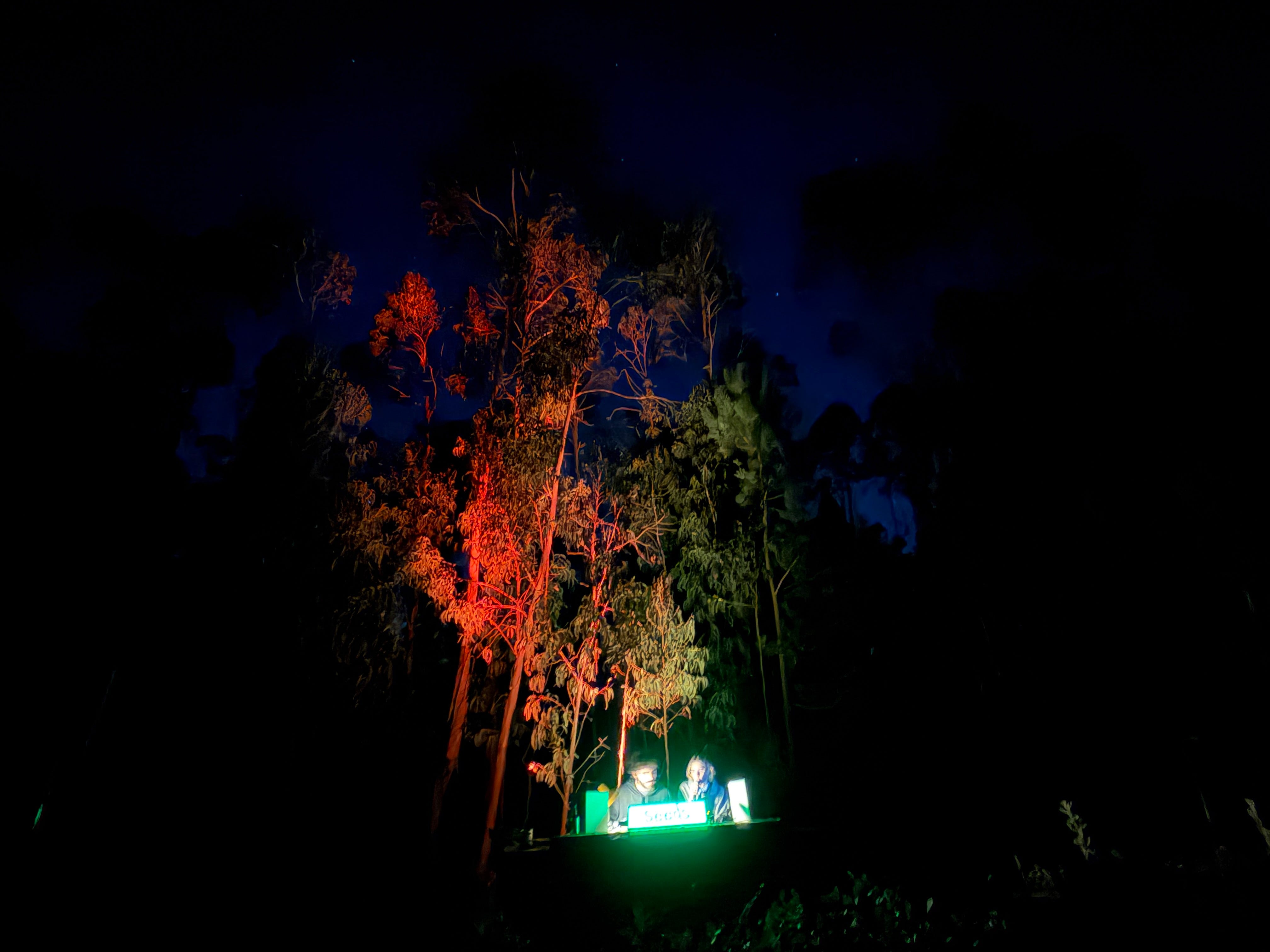


Maria Amor and Shcuro have spent ten years asking how Portuguese dance music began. Paraíso, the Lisbon collective they started in 2016, grew out of that curiosity and set out to rekindle the flame of the country’s 90s scene.
It began as a radio show with the Portuguese pioneers on Rádio Quântica. Then came a record label, a party, and Paraíso, Daniel Mota’s documentary on 90s rave culture in Portugal, which premiered in the UK at Rio Dalston in May and that same week at Watching Trees. This year Paraíso became a cultural association.
“Learning about how it all started made us want to share it as well,” they say, “as knowledge always needs to be shared, and we both found a life-mission in discovering and archiving our beautiful scene.”
Both have always played for the dancefloor. Propagation 005 is a recording of the ambient set they played on 31 October under the trees on the hillside that Make Forests Great Again is replanting. It is their second ambient set, and the first with Maria singing over it.
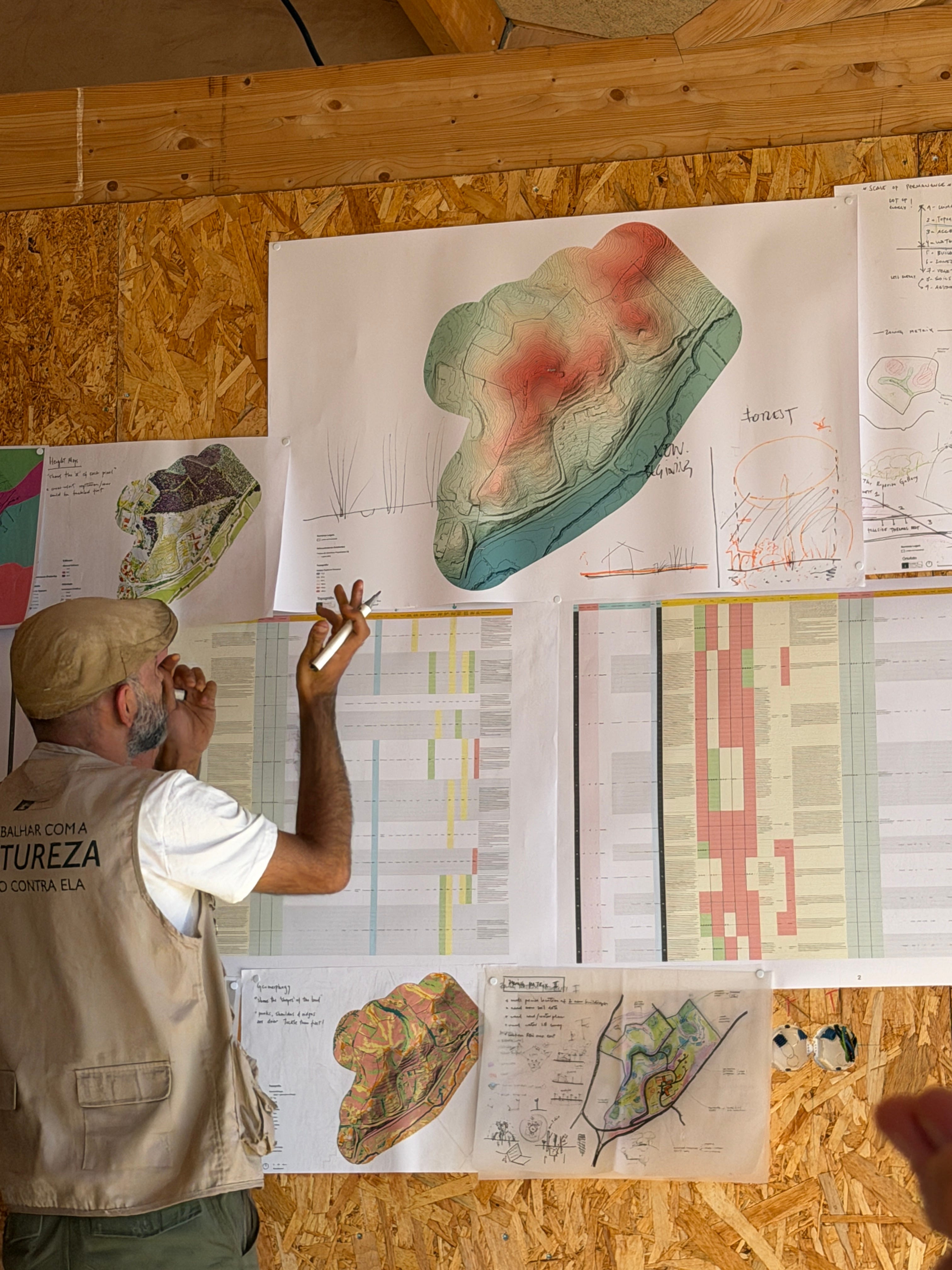
Make Forests Great Again turns green deserts into forests again. Much of Portugal is planted with eucalyptus, in rows of a single species grown for paper, and little can live there. The project starts with one hillside near Torres Vedras: Quinta da Messejana, an old estate that is almost entirely eucalyptus and overtaken by invasive acacia. The aim is to help it return to the cork-oak forest that belongs there.
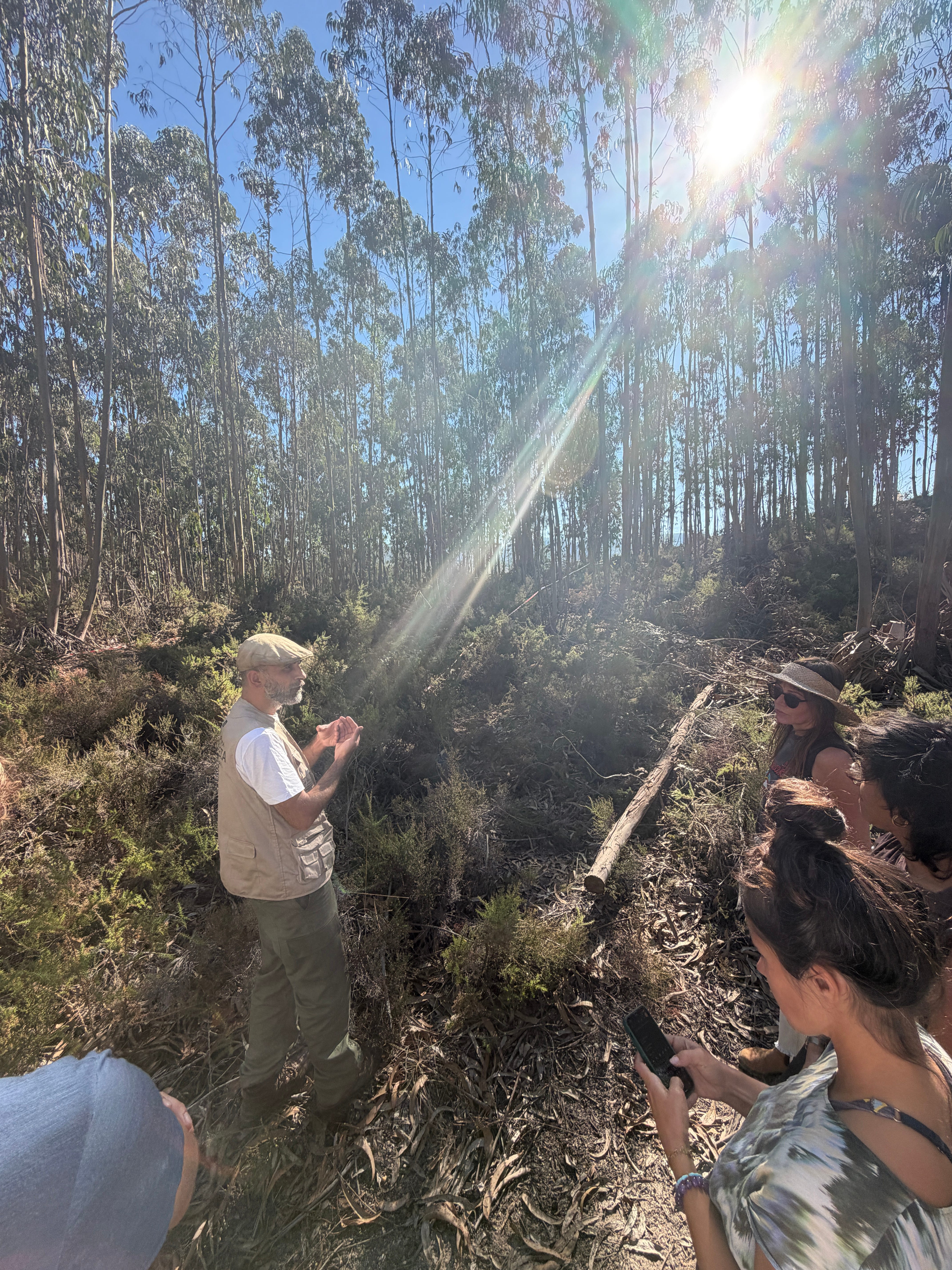
Most of the work is clearing the invaders, gathering acorns from the oaks still standing and letting the forest return, with the local jays burying acorns as they go. It will take decades. We were introduced to the people at the quinta last year, and a friend of ours now heads up the project. The set was part of its first volunteer weekend, as an evening of music under the trees, open to all.
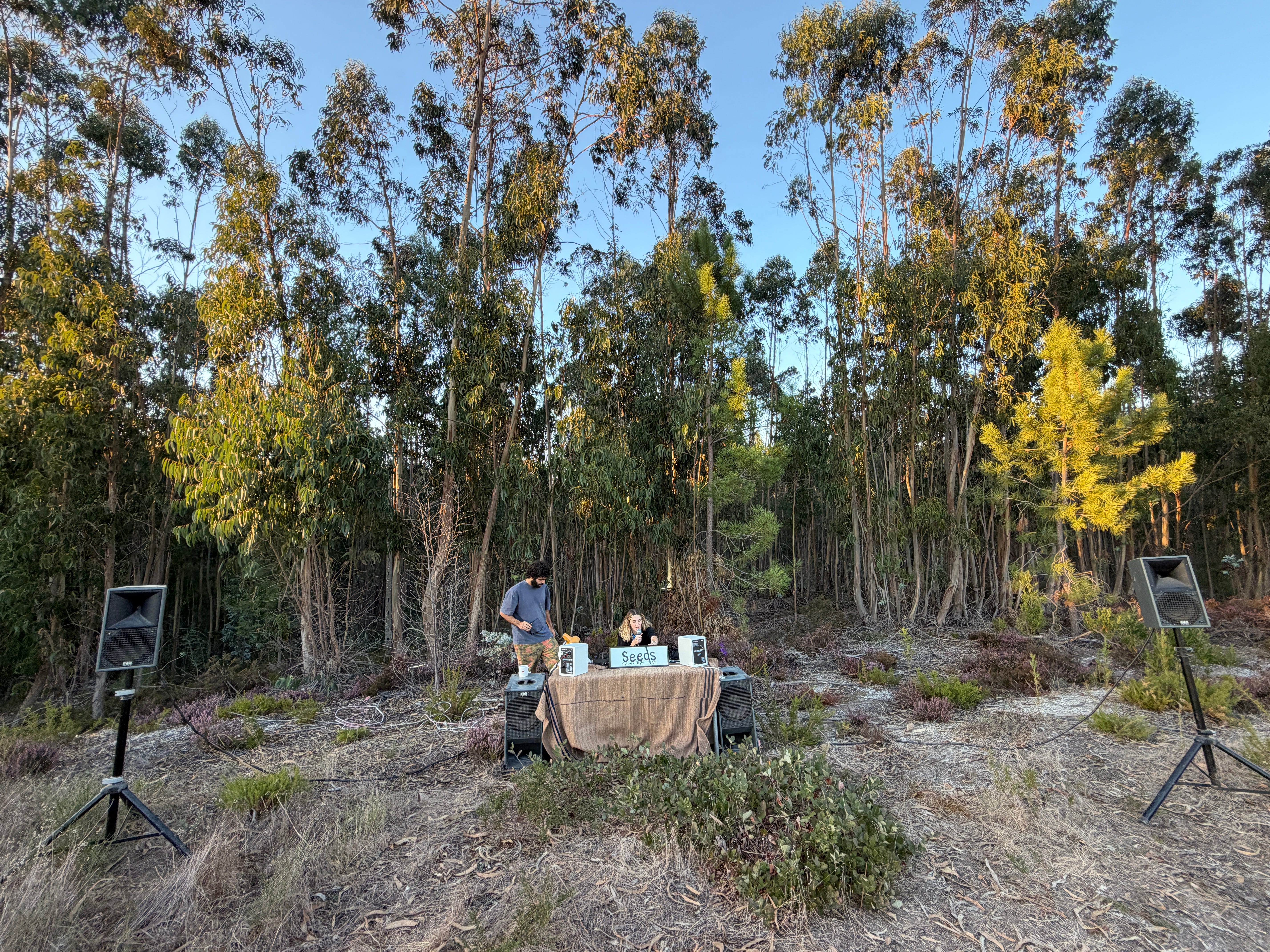
The hill at Quinta Messejana took them back to their first ambient set, also played under the trees, at Watching Trees. “We knew it was fitting,” they say.
Before the set, they walked the land. “We were lucky enough to have a tour of the hill and farm, with a delicious freshly ground mug of coffee in hand,” they say. “Everyone is as caring and lovely as the nature that surrounds them.”
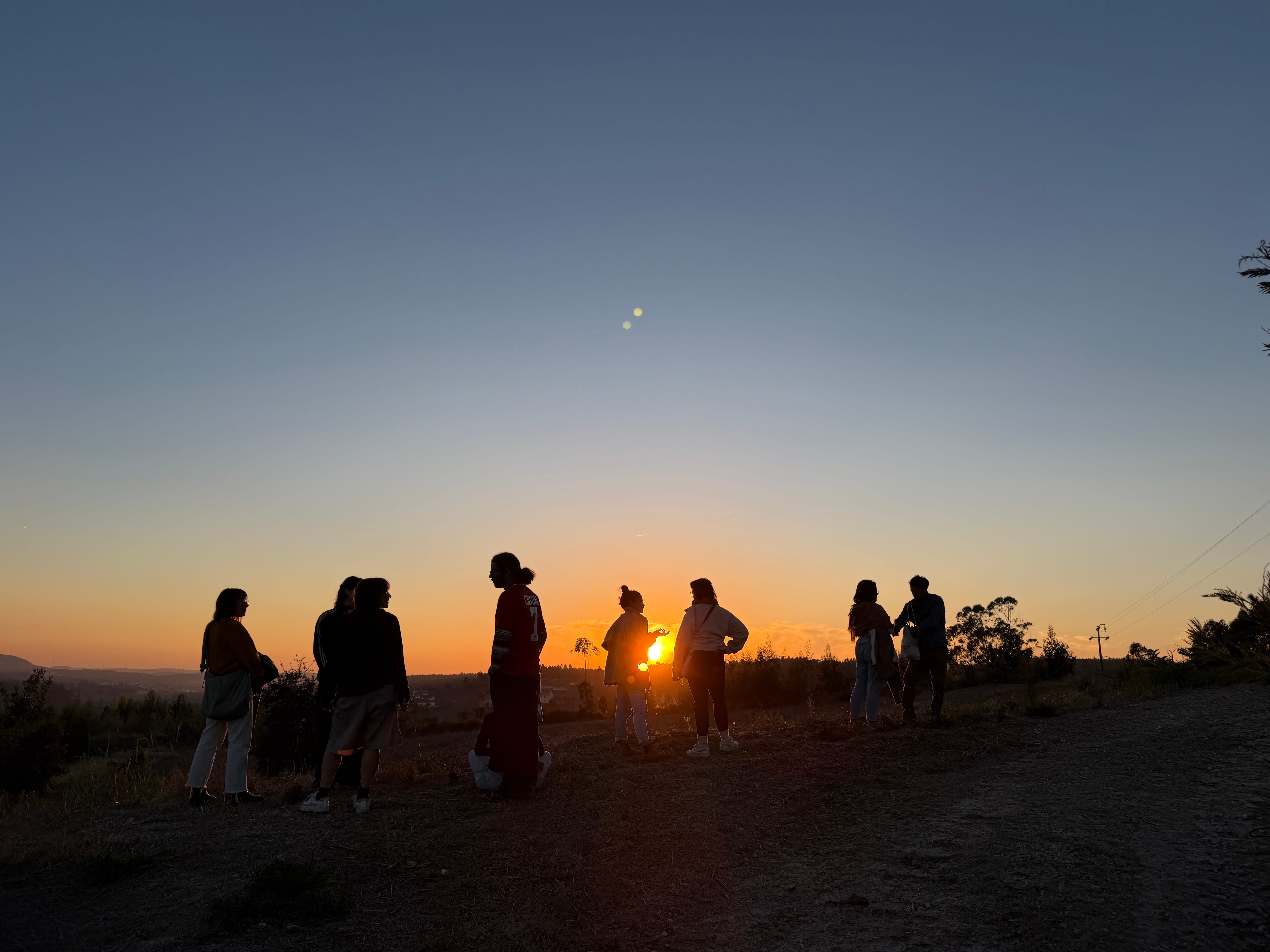
By evening, people sat and lay down among the trees at the top of the hill. For two DJs used to clubs, that changed the room: it “created a shared experience that didn’t involve dancing in the dark but was equally as deep.”
The set itself is built from long blends. Their approach, they explain, is to choose music that mixes well into “long immersive mixes and, at the same time, give us enough room to explore different emotions.”
Maria’s vocals were not part of the plan. Packing for the gig, she says, “our vocal processor was calling my name.”
Once they reached the farm, she went through her phone. “I chose some poems and texts I always have written down on my notes app, and also searched for lyrics of some tracks I’ve been thinking about. Then honestly I just freestyled it on top of the set.”
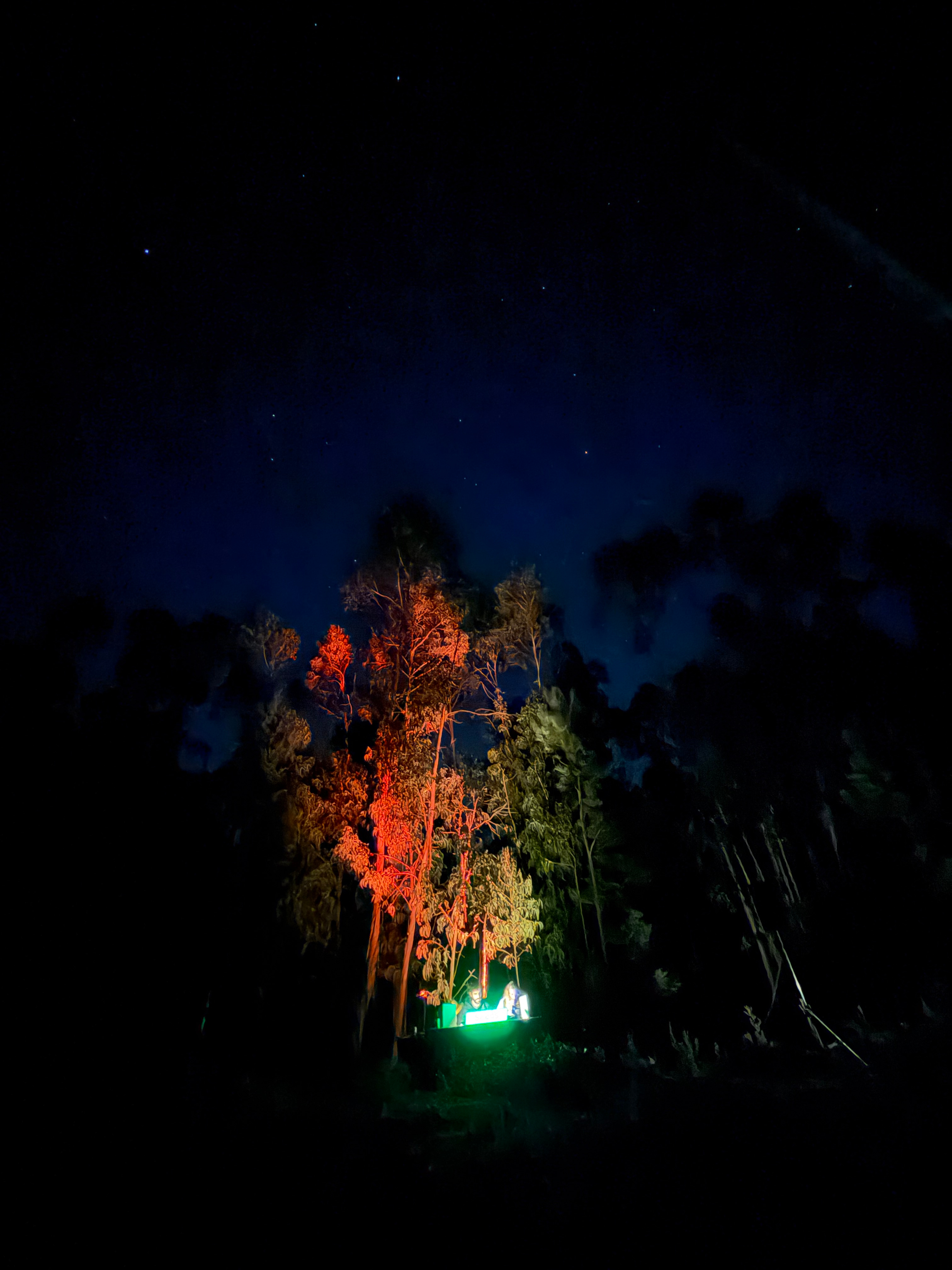
Shcuro heard the set change around her. “People slowly started getting into it and sat to listen to it,” he says. “After a bit, Maria started singing and that made me feel excited to start looking for music to mix in that would work well with what she was singing.”
Watching Trees was the first time they had been invited to play ambient. That set had no vocals and was more upbeat, and they went inwards with it. “We’ve both always been very dancefloor-focused, as DJs, but both of these gigs felt like an opportunity to showcase more of ourselves and what we listen to at home that isn’t necessarily club-driven music.” The hill set, they say, “felt more human and alive, mimicking the forest around us.”
What they listen to at home reaches back to Aphex Twin, Basic Channel, Biosphere, Boards of Canada, Coil, Fennesz, the Future Sound of London, Global Communication and William Basinski. The newer names include Barker, Caterina Barbieri, Gas, Huerco S., Kali Malone, Kaitlyn Aurelia Smith, Oneohtrix Point Never, Skee Mask and Astel, also known as Addison Groove. They come back to most of them regularly.
Maria does not keep the two worlds apart. “I’m not the biggest believer in ever separating the art from the artist,” she says. She has always thought of herself as a lover of all music, which makes tightly focused sets hard for her. An ambient-only set is a challenge she welcomes: it “really expands the way I construct my musical dialogue and gives me a chance to know a little bit more about myself.”
As for what a listener should do while it plays: “Whatever the fuck they want!”


The hill is being replanted, and they felt part of it. “I don’t know if this is too romantic of a thing to say, but I think we both felt like growing alongside the trees with this set (and setting),” they say. “It’s only our second ever ambient set and the first to include live vocals, so in a way, I’d like to believe we’re flourishing as well.”
At home, Maria is a new gardener. Living in an apartment, she brings the outside in, with houseplants and herbs on the balcony. Her favourite is spring onions: “Just put them in some water, and they will grow roots.” She also takes cuttings from her plants. “I honestly never know how it will turn out, and I love the discovery.”

Asked to choose one plant to stand for the recording, she picked a red carnation, the flower of Portugal’s 25 April 1974 revolution. “I believe nature will follow our need for liberation, and inspire us to fight back against the structures that want to make our lives smaller and less meaningful,” she says. “Flowers don’t bloom all year, and neither do we, but they will always show us a way to flourish with patience, and at the right time.”
Making the documentary showed them what had always driven the scene. “It made us very aware of how much the driving factor in this scene has always been community-based,” they say, “which then made us aware of how much we need to nurture said community, give back, grow it and create the space for our collective efforts to develop.”
This year Paraíso became a cultural association. “We are so proud of the little world we managed to build over these last 10 years,” they say. The hill set shows another side of them: “In being pushed to do something different, we’ve also been allowed to grow, which inevitably will make our baby, Paraíso, grow too.”
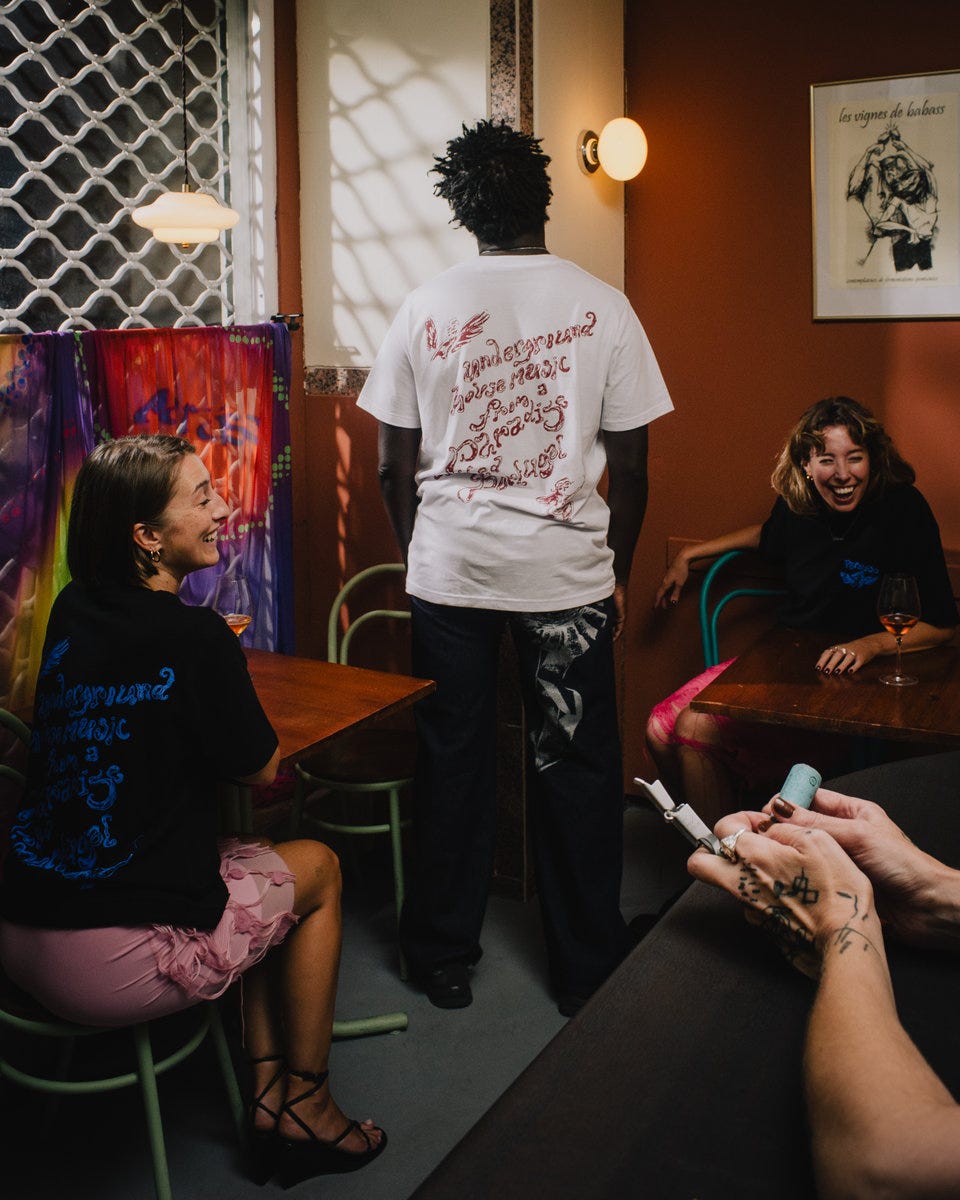
To mark the decade, Paraíso asked their friend Polly to design new merch, a capsule collection of T-shirts available through the Paraíso Bandcamp. “It’s also a way to expand our little visual identity cosmos.”
“There’s a lot of love involved in everything we do,” they say, “and we really hope it shines through this recording, as we felt so much of it when playing.”
Follow Make Forests Great Again and Paraiso here.